
It’s no secret that I enjoy eating. Anyone who spends quality time with me will quickly find out that I like food. I enjoy learning about food – cuisines, techniques, symbolism, the science, everything! I can read a NYT article written by a food critic, watch Alton Brown discuss food science, meander through YouTube how-to and be captivated by an Instagram story presenting a 15s montage of creating a dish. I’m curious about food and I’m uneasy by the amorphous cloud of condescension that blankets the food world. I’m striking out in this post to ask myself why I feel bad and then tell myself to just enjoy food as I enjoy it.

I’m not the best cook, although I can make a good dish. I’m not a baker as it requires an attention to detail that I find suffocating. What I am is a food traveler who enjoys the atmosphere created by food, especially when it comes to learning how other ethnicities engage with food, however at times I feel as if I am off-kilter with the rest of the popularists in the food world. I don’t go in for delicacies that I find off-putting even though this country seems to think if you don’t eat those types of dishes, you’re intolerant. I won’t try everything. I cannot wax rapturous about tofu, but I can talk about how amazing fried pono is! I don’t have a personal garden on my balcony of fresh vegetables and fruit from which I procure ingredients for a hastily thrown together salad or sauce that transforms the eater’s taste buds, although I find it admirable if others do and understand the difference in taste that it makes.
There are many dishes and combinations that renown chefs enjoy, but that I don’t – a fact that has made me feel as if I’m not cut out for the food world (which in and of itself is an odd thought since we all eat and are technically part of the food world, just go with me on this). I can’t get down with Gyeranjjim and I believe that seasonings and spices don’t destroy the taste of food, but enhance. That should be okay. In fact, it should be more than okay, it should be perfectly fine, so why do I feel pressured because I like spicy foods rather than plain dishes? Somewhere, it’s been subtly accepted that food people need to be a certain way.

The wine I enjoy, Moscato, is looked down upon as not being “good enough”. I am a fan of plum and peach wines who have their origins in Asia (China, particularly), but I won’t take a glass of Chardonnay or Pinot Noir and I have yet to taste a champagne that I find palatable. I like what I like. What I don’t, I don’t. On my one and only trip to London to spend Thanksgiving with my brother and his family, he shared with me the goodness of this particular German wine. It was delicious, but it was the only one that wasn’t a Moscato that I have ever found pleasing. Oenophiles, and “foodphiles” alike, all have this tendency to tell everyone just how amazing x is without considering if the person wants to know, or cares to know. They forget that other people may not give one jot about tannins or in my case, orange juice – and it’s okay. I am not a fan of American chain restaurants and have made a face at one or two occasions when the suggestion of a group lunch or dinner at Applebee’s has been made. If I have offended anyone, please forgive me, I never meant to be overbearing.
So what was I doing then? I wanted others to try other things. Simple. I don’t mean bone marrow (although we used to eat that as children and it was mighty tasty, so I don’t know how it’s a fad now), but a dish that seems palatable but is not known by them. That’s all. Let’s push the door open just a bit so we can put our toe in, and if we find that we don’t like it, we can walk away. I’ve suggested and others haven’t wanted to even put a toe in. That too, is fine. I have eaten Ethiopian food at a funeral, at someone’s house and at restaurants and every single time, I have been sick. Even the smell of Ethiopian food makes me sick. I don’t know why. I wish I enjoyed it because there is so much of it in this region, but I can’t. I’ve given it multiple tries, only to find myself bent over with my face in the sink vomiting and curled over holding my abdomen from the cramping, so if someone doesn’t want or like a cuisine, I let them be. In the words of my friend, Bryan, “I get it”.
But I have my own food superpower. Even without eating at a certain establishment, I have been able to choose restaurants whose dishes were mighty tasty. How? It’s a gift, and like all gifts, it’s given to you as is. I can’t explain it, but I have an eye. It’s been evident during this pandemic as I Doordash friends and family from restaurants I’ve never been to, only to have them exclaim in their texts just how good the food was and how in the world did I find it? I shrug, smile and beam. It’s a gift, I say. A gift from God. When I feel as if I could never host a tv show because I’m not like the others, I remember that I have my own gifts and my own relationship with food.

So if you’re reading this, (thank you), and, let’s all enjoy what we enjoy. No more feeling pressured to like this or that, to eat this and not that, to feel bad if we wax poetic or not about an ingredient or a meal. I like my friend Nia’s grilled cheese sandwiches. My mommy, who has been gone nearly half my life, made an amazing okra stew with crab that will never be replicated. My husband makes the most mouth-watering soups and stews. My Mama J can pull together a meal of eggplant, spinach, peppers and kobe with boiled plantain that will have me skipping down the street. I will tear up some DiGiorno’s pizza that I have smothered in Rao’s pizza sauce and extra cheese. Every so often I’ll eat Korean noodles every day for a week accompanied by kimchi and dumplings. I put peanuts in my cereal and crush ginger snaps into my ice cream.
And I’m okay with it.

 the familiar greeting of our next door neighbor. Preoccupied with my own feelings, I had not thought he would be there but there he was, hailing me from his large first floor backyard patio. We chatted about the unwanted hijinks of the people who camp on the other side of the street, turning it into a highway rest stop of sorts – doling out cards, arguments, hawked items and drugs and our efforts to inform the metropolitan police department about their dangerous presence. Throughout, I kept sweeping the dead leaves fallen from the force of the recent rains, pulled dying leaves off the citronella and cayenne plants and rearranged the plants. From this our conversation meandered through politics, the fires out west, #45’s stupidity, the world supply chain and the twilight zone of virtual reality that we find ourselves in. From time to time, the loud surging sounds of the onrushing metro or the noisy clanking rattle of semis hauling materials back and forth to the depot a little ways away from us interrupted the flow of conversation but for the most part, we talked constantly. Laughter punctuated the air as we traded realizations and shook our collective heads about the state of the world.
 The powerfully healing connecting that positive human interaction – devoid of virtual constraints – brings to bear on the disconnected soul. The way it gently pulls you away from the worrisome, self-contained, mundane thoughts that run through your mind to see outside of yourself, releasing you from the entanglements of judgment calls, pressures of personal goals and analytic machinations which define our worlds. I experienced non-familial, genuine human interaction unsullied by fears of contagion or unduly hurried by time restrictions, when I most needed it today.
 So help me understand this strangeness: at some point during any Zoom call, I suddenly become tired but when the call is over I feel oddly bereft. Whether or not I’m looking forward to the call is a non-factor in the sudden onset fatigue that hits me at some point during the call, followed by a disengaged mind. It takes me a few minutes to even realize that I’ve disconnected from the call, but once I do, I may or may not re-engage my mind at that moment. Nevertheless, when the call is over, I have this immediate sense of being deprived of something good.
  Somehow movement has a way of fueling itself. Newton’s first law states that “a body at rest will stay at rest until a net external force acts upon it and that a body in motion will remain in motion at a constant velocity until acted on by a net external force.” So is this it? Are we all experiencing a metaphysical manifestation of Newton’s law?
  Am I the only one?
  I don’t know how to break the hold that a certain type of being productive has on me. The only times that I can indulge in movies or funny sketches without some guilt is when I am utterly wiped. At any other time, I have this opportunity cost meter ticking and weighing my actions inside my head. Opportunity cost is the only definition from my undergraduate Microeconomics that I remember. The New Oxford American Dictionary defines it as “the loss of potential gain from other alternatives when one alternative is chosen.” It’s what I miss out on when I choose one particular action over the other, so in this case, by watching funny sketches by
 exclusive to the Japanese. Kodawari is found around the world in millions of people, however, it is not as whole-scale beloved as it is in Japan. Nowhere else in the world is this concept embedded as deeply or revered as much as it is in Japan. Nowhere will you find it heralded as much as in Japan. Developing “a mind-set of determined and scrupulous attention to detail, motivated by a sincere passion and self-discipline; knowing that some of these efforts will go unrecognised“a is as Japanese as pacifism is Ghanaian and individualism is American.
 door now swings open noiselessly. It also keeps moving until the bottom hits one of the mats. In the past, I could rely on it not moving but now, it will swing right back out – unless you pull or push the door shut. So the other day, I didn’t completely shut the door and it swung back into the bathroom, grazing my leg (our bathroom is classic DC small). For a brief moment I was annoyed.
 and sense of security that we never did. We are more God-conscious and less self-conscious. When confronted with pain, suffering, troubles and fears we don’t spend

 Don’t forget that outside of romantic relationships, we have our own insecurities about our value, worth, mental and emotional health, financial skills, career choices and so many others. We struggle with believing that our spouses love us just for us, not for what they can “get” from us. We wonder if we have to act a certain way to be loved? Can we provide financially, emotionally, physically and sexually for our partners? How much of our true selves can we safely believe they can accept and love? Can we be “there” for them in ways that are healthy for both of us or do we have to be subsumed by the marriage or the other person? Are we GOOD ENOUGH?
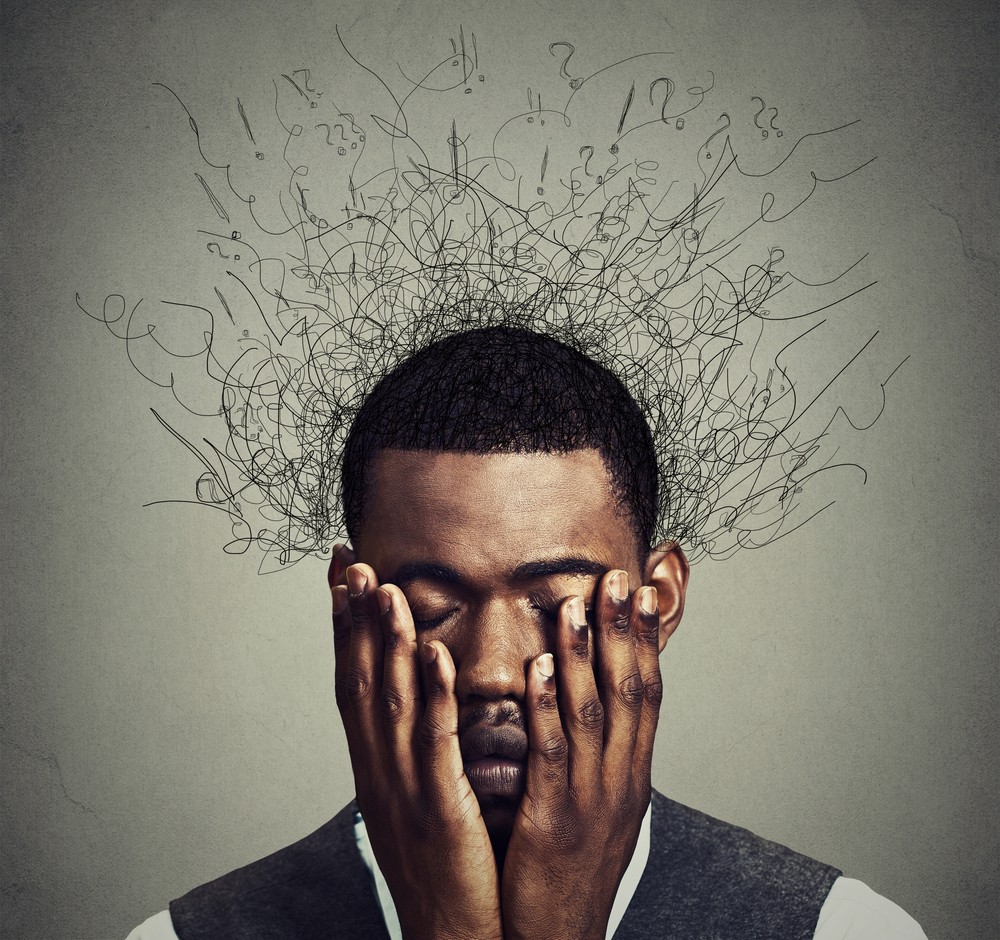 This is a three-tiered layering. The first tier is the action – in this case, your wife comes home and is quiet. The second tier is your interpretation – that she is upset with you. The third tier is your emotional response – anger, bitterness, resentment. Because of your childhood, you’ve never seen silence as reflective of anything other than punishment; but what if you stopped to ask your wife? You may discover that the commute home is always tiring and she just needs about half an hour to sit, shower, rest so she can regain her energy – in short this is about her energy levels and has absolutely NOTHING to do with the story you’ve been telling yourself.
 Inside Out